Dr. Jo Anne Stratton Visits the Tisch MS Research Center of New York
The Tisch MSRCNY recently welcomed Dr. Jo Anne Stratton, PhD, to the Center for a research seminar exploring a unique contributor to MS pathology: ependymal cells at the brain–cerebrospinal fluid (CSF) interface.
Dr. Stratton is a neuroscientist and Assistant Professor of Neuroimmunology at the Montreal Neurological Institute at McGill University, where she leads an innovative research program focused on neuroimmune interactions in health and disease. She earned her PhD from the University of Melbourne and completed a postdoctoral fellowship at the Hotchkiss Brain Institute in Calgary.
In her laboratory, Dr. Stratton leads a 15-person team investigating the role of a specialized glial cell in the central nervous system (CNS) —the ependymal cell—in neurodegenerative diseases like MS and Parkinson’s disease. The Stratton Lab is also a leader in responsible research practices, prioritizing environmental sustainability, open science, and meaningful engagement with the neurological disease and disability communities.
A Closer Look
Glial cells are the “glue” of the nervous system. They hold neurons in place, help produce myelin, clear debris from the brain, form protective boundaries like the blood-brain barrier, and maintain the environment that neurons need to function.
Ependymal cells are one type of glial cell. Specifically, they regulate the flow of CSF, and their ability to transform into other cell types in response to injury makes them a potential target for CNS repair.
Creating Connections
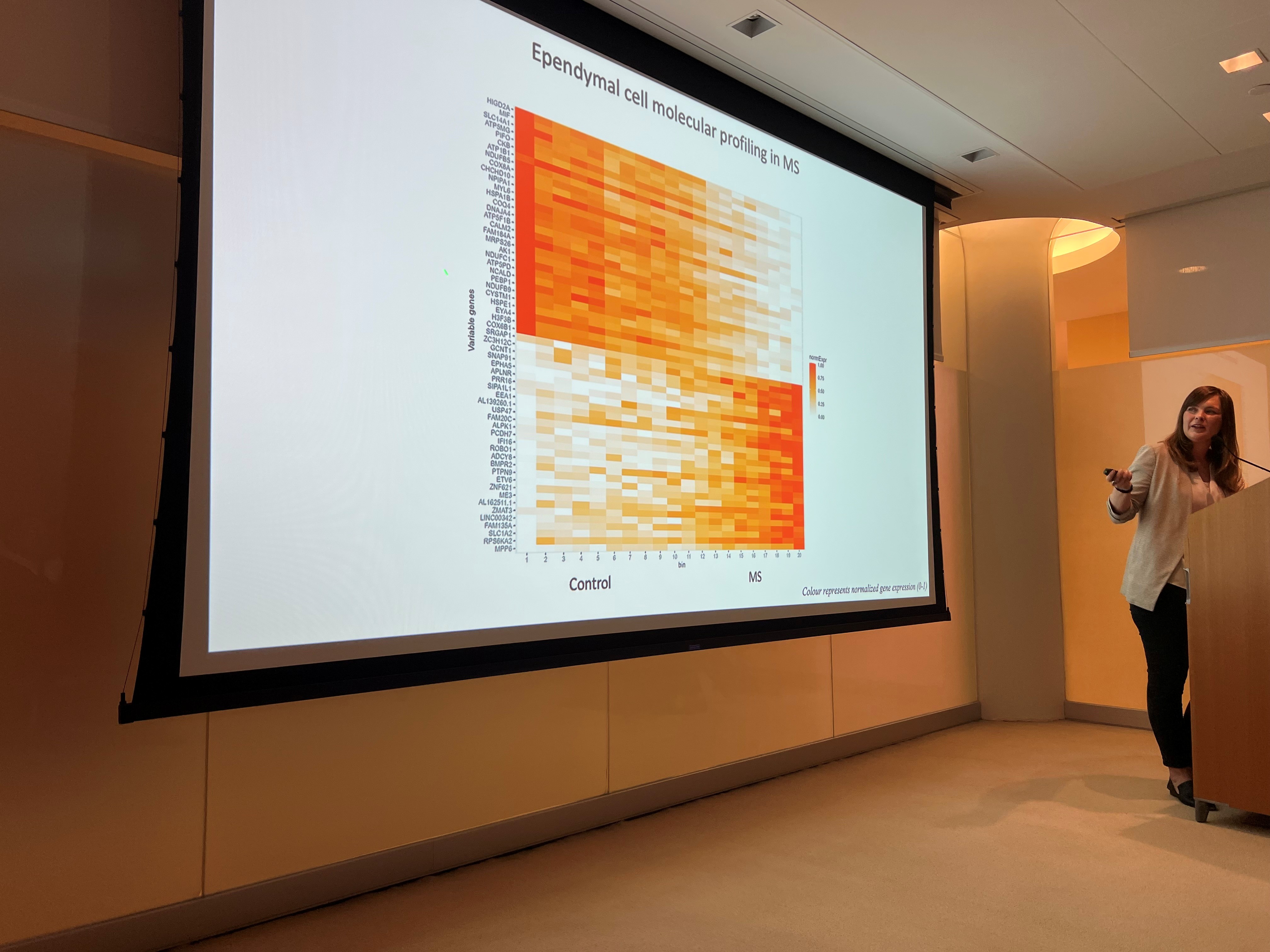
At Tisch, Dr. Stratton shared findings demonstrating that ependymal cells are dysregulated in MS and in the EAE animal model, contributing to neuroinflammation and behavioral changes. Interestingly, exposure of ependymal cells to MS CSF resulted in changes in gene expression and disrupted their ability to regulate the flow of CSF. Her results suggest that ependymal cell disruption could play a role in the formation of periventricular lesions and behavioral deficits in MS.
Dr. Stratton’s work complements ongoing research at Tisch MSRCNY led by Dr. Jamie Wong, whose program investigates the pathogenic potential of MS-associated CSF autoantibodies. Collaboration between Dr. Stratton’s lab and Tisch MSRCNY will focus on identifying disease-relevant CSF-associated autoantibodies and investigating their effects on ependymal cells within the central nervous system.
Thank you, Dr. Stratton, for an insightful and educational presentation!